calendar_today
October 6, 2026
folder
College News
A Beginner’s Guide to Phlebotomy Training at MedPrime
What is phlebotomy?
If you are new to healthcare training, the word “phlebotomy” may sound more complicated than it is. Phlebotomy is the practice of collecting blood from a patient for laboratory testing, transfusion services, blood donation, or other medical purposes.
A phlebotomist does more than draw blood. The role also involves confirming a patient’s identity, preparing the right equipment, following infection-control procedures, labelling the specimen correctly, and helping the patient feel safe during the process. Even a small mistake in identification, labelling, or specimen handling can affect the quality of a test result.
That is why proper training matters, especially for beginners who have never worked in a clinical environment before.
What is MedPrime’s phlebotomy course?
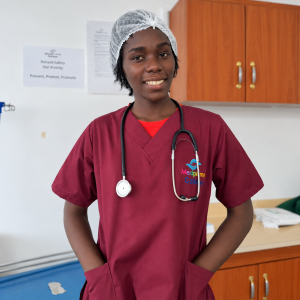 MedPrime Training College offers a Certificate in Phlebotomy, a professional short course that takes three months. The program is offered through the college’s Department of Laboratory Science.
The course is designed for learners who want focused training in blood collection and related patient-care procedures. It may be a useful starting point for school leavers, people changing careers, or anyone who wants to explore healthcare without immediately committing to a longer program.
The three-month duration does not mean that phlebotomy is effortless. Students still need to learn technical procedures, safety standards, basic anatomy, specimen handling, and professional communication. The shorter format simply keeps the training focused on a specific healthcare skill.
What do beginners learn during phlebotomy training?
At MedPrime, the program covers the main knowledge and practical skills needed for safe blood collection.
1. Venipuncture
Venipuncture is the process of drawing blood from a vein. Beginners learn the principles behind preparing the patient, selecting an appropriate site, handling equipment, and carrying out the procedure safely under supervision.
2. Capillary blood collection
Students are also introduced to capillary collection, which involves obtaining a small blood sample, usually through a finger prick. This is different from venipuncture and requires its own technique and patient-care considerations.
3. Patient identification and preparation
Before collecting a sample, a healthcare worker must make sure they have the correct patient and understand what is required. Training includes patient identification, communication, preparation, and helping patients who may be nervous about needles or blood collection.
4. Infection prevention and control
Because phlebotomy involves contact with blood, infection control is essential. Students learn about hygiene, protective equipment, safe handling of materials, and procedures that help protect both patients and healthcare workers.
5. Specimen handling and labeling
A blood sample must remain correctly identified and suitable for testing after it has been collected. The course covers safe labelling, specimen handling, and transportation, as well as laboratory safety.
6. Basic circulatory anatomy
Understanding the circulatory system helps students know where blood comes from and why different collection sites and techniques may be used. This foundation supports safer and more informed practical work.
What makes MedPrime suitable for beginners?
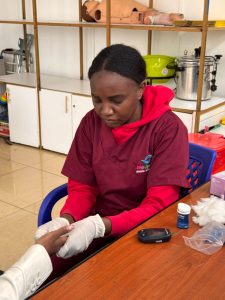
Choosing a first healthcare course can feel intimidating. One advantage of a focused program such as MedPrime’s Certificate in Phlebotomy is that the learning path is relatively clear: students build a foundation, practice key procedures, complete assessments, and work towards a certificate in one defined area.
Here are some features that may be useful for a beginner.
Practical sessions are included.
MedPrime lists practical sessions as included in the full course fee. This is important because phlebotomy is a hands-on skill. A student needs more than notes about needles and blood tubes; they need an opportunity to practise patient preparation, equipment handling, specimen labelling, infection-control steps, and post-procedure care.
Before enrolling, beginners should ask how many practical hours are included and whether the sessions take place in a simulation lab, a clinical setting, or both.
The timetable includes weekday and weekend options.
MedPrime advertises flexible weekday and weekend learning. This may help students who work, have family responsibilities, or need an alternative to a standard weekday timetable.
It is worth confirming whether all practical sessions are available on weekends, since practical training may have different attendance requirements from classroom sessions.
The entry requirement is KCSE Grade D-
MedPrime lists KCSE Grade D as the entry requirement for the Certificate in Phlebotomy. This makes the course accessible to many school leavers who are interested in healthcare but may not qualify for a longer or more advanced program.
A lower entry requirement does not mean students will not need to work hard. Beginners should be ready to study basic anatomy, follow safety procedures carefully, practise consistently, and communicate respectfully with patients.
Students receive a free additional BBP certificate.
Upon completing the course, students receive one additional Bloodborne Pathogens (BBP) certificate free of charge, alongside the main Certificate in Phlebotomy.
BBP training is relevant to phlebotomy because the work involves handling blood and other potentially infectious materials. The additional certificate can serve as useful evidence that the learner has completed related bloodborne-pathogen training without paying a separate fee for it.
Students should confirm with MedPrime how the BBP certificate is issued, which organization provides it, and whether it is presented at the same time as the main course certificate.
How much does the MedPrime phlebotomy course cost?
MedPrime currently lists the full course fee as KES 40,500. The course page states that practical sessions and assessment support are included.
Before making a payment, ask whether the published amount also covers registration, examinations, uniforms, personal protective equipment, learning materials, transport to any practical site, and certificate-related charges. Course fees and conditions can change between intakes, so it is best to confirm the current information directly with the college.
What happens during the three months?
The learning process will generally involve:
1. Learning the foundations: basic anatomy, blood collection equipment, patient preparation, and safety.
2. Building practical skills: practicing venipuncture and capillary collection under guidance.
3. Protecting the patient and specimen: applying identification, infection-control, labelling, handling, and transport procedures.
4. Developing professional confidence: communicating with patients, documenting work, and responding calmly when a collection is difficult.
A new student may feel nervous at first, especially when learning to work with needles. That is normal. The purpose of supervised practice is to help students develop safe technique and confidence gradually rather than being expected to perform perfectly on the first day.
Where can phlebotomy training lead?
MedPrime lists several potential career pathways for graduates, including:
i. Hospital phlebotomist
ii. Medical laboratory assistant
iii. Blood bank technician
iv. Mobile blood collection services
v. Private clinic phlebotomist
vi. Health screening programs
These are possible directions, not guaranteed job placements. Employers may have different requirements, and some roles may require additional experience, registration, or further laboratory training. It is therefore useful to ask MedPrime what progression options and graduate support are available after the course.
Who should consider this course?
MedPrime’s beginner-friendly phlebotomy training may suit you if you:
i. Are interested in healthcare and laboratory work
ii. Want a short, focused course
iii. Meet the KCSE Grade D- entry requirement
iv. Prefer a program that includes practical training
v. Need weekday or weekend study options
vi. Want to gain an additional BBP certificate at no extra cost
vii. Are considering a future role in a hospital, clinic, blood bank, or health-screening program
The course may not be the right choice if you are looking for a broad qualification in nursing, clinical medicine, or medical laboratory science. Phlebotomy is a specialized area, and a three-month certificate should be viewed as focused skills training rather than a replacement for a longer professional healthcare program.
Questions beginners should ask before enrolling
Before applying, it is reasonable to contact the college and ask:
i. When is the next intake?
ii. Which campus offers the course?
iii. How many practical training hours are included?
iv. Where are practical sessions held?
v. Is a hospital or clinical attachment included specifically for phlebotomy students?
vi. Will I receive one additional BBP certificate free upon completion?
vii. Who issues the BBP certificate?
viii. Are registration, assessment, uniform, equipment, and learning materials included in the KES 40,500 fee?
ix. What documents are required for admission?
x. What support is available after graduation?
These questions can help you understand what the course will be like in practice, not just what appears in the course description.
Final thoughts for future phlebotomy students
Starting a healthcare course can be a significant decision, particularly if you have no previous clinical experience. A beginner does not need to know everything before enrolling, but they should be prepared to learn carefully, practise consistently, and take patient safety seriously.
MedPrime’s three-month Certificate in Phlebotomy offers a focused introduction to blood collection, specimen handling, infection control, and patient interaction. The practical sessions, flexible weekday and weekend options, KCSE Grade D- entry requirement, and free additional BBP certificate may be useful advantages for someone looking for an accessible starting point in healthcare.
The most sensible next step is to contact MedPrime and confirm the latest intake date, total costs, practical arrangements, certificate details, and progression options. That information will help you decide whether the course fits your goals before you apply.
Frequently asked questions
How long is phlebotomy training at MedPrime?
MedPrime’s Certificate in Phlebotomy takes three months.
What is the entry requirement for the MedPrime phlebotomy course?
The official course page lists KCSE Grade D- as the entry requirement. Applicants should confirm whether any additional documents or conditions apply to their intake.
How much is the MedPrime phlebotomy course?
MedPrime currently lists the full course fee as KES 40,500, with practical sessions and assessment support included. Confirm the latest fee and any additional charges before enrolling.
Do students receive a BBP certificate?
Yes. Students receive one additional Bloodborne Pathogens (BBP) certificate free upon completing the course, in addition to the main Certificate in Phlebotomy.
Can I study phlebotomy on weekends?
MedPrime advertises flexible weekday and weekend learning. Ask admissions whether the schedule for your preferred intake includes weekend practical sessions.
What does beginner phlebotomy training cover?
The listed topics include venipuncture, capillary collection, patient identification, infection control, specimen handling, laboratory safety, circulatory anatomy, safe labelling and transport, and patient interaction.