calendar_today
October 17, 2026
folder
College News
What to Look for in a Three-Month Healthcare Assistant Course in Kenya
What to Look for in a Three-Month Healthcare Assistant Course in Kenya
Starting a career in healthcare does not always require committing immediately to a multi-year programme. For some learners, a well-structured three-month Healthcare Assistant course can provide a practical introduction to patient care, basic life support and the responsibilities of working in a healthcare environment.
However, the length of a course should not be the only consideration. Before enrolling, it is important to understand what is taught, whether practical exposure is included, how attachment is arranged, what the total cost covers and which certificates a student receives after graduation.
A three-month structure that combines theory and practice
A strong healthcare assistant program should combine classroom learning with supervised practical exposure. One example is the structure offered by MedPrime Training College, where the three months are divided into two months of classroom training and one month of clinical attachment.
The first two months are designed to build the learner’s foundation. Topics include basic nursing skills, hygiene, bathing, dressing, feeding, mobility support, taking vital signs, infection prevention, nutrition support, chronic disease support, and emergency response.
This type of training is useful because healthcare assistance involves more than helping with daily activities. A healthcare assistant must also observe a patient carefully, notice changes, and report concerns to the appropriate nurse or healthcare professional.
The final month is dedicated to clinical attachment. This gives students the opportunity to experience the routines of a healthcare setting and apply what they have learned in class.
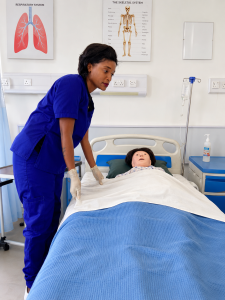
Why attachment support matters
Many students are interested in healthcare training but become uncertain when they reach the attachment stage. Finding an appropriate facility, making inquiries, and arranging placement can be difficult, especially for a first-time student.
A student-supportive institution should therefore assist with the transition from classroom learning to clinical exposure. At MedPrime, students are linked with attachment opportunities as part of the training process. This means that the student does not have to search for an attachment placement independently.
That support can make the course more convenient and help learners focus on preparing for the practical environment. Before joining any institution, prospective students should still ask where the attachment will take place, how students are supervised, when it begins and whether there are any requirements they need to meet.
Certification after graduation
Certification is another important factor to consider. At MedPrime, students graduate with three certificates at no additional charge as part of the program package:
I. Healthcare Assistant certificate
II. Basic Life Support certificate
III. First Aid certificate
The Basic Life Support certificate and First Aid certificate are provided for free upon graduation. These additional certificates can give learners a broader foundation in patient support and emergency response, while also documenting skills that may be relevant when applying for opportunities in healthcare, caregiving, or home-based care.
Students should always confirm the exact certificate titles, assessment requirements, and graduation process with the institution before enrolling. Certification is most useful when it accurately reflects the training completed and the skills assessed.

What can a Healthcare Assistant do?
Healthcare assistants may support patients in different environments, depending on their training, experience, and employer requirements. Potential areas include hospital patient support, nursing home care, home-based care, elderly care, disability support and hospice care.
The work can involve supporting daily activities, maintaining hygiene, assisting with mobility, checking vital signs, providing basic comfort and communicating observations to the wider healthcare team. It requires patience, confidentiality, compassion and respect for patient dignity.
A short course provides an entry point, but it does not remove the responsibility to work within one’s training and follow the policies of the facility or employer. Learners should also expect to continue developing their skills after graduation.
What is the total cost?
The total cost of the three-month Healthcare Assistant programme at MedPrime is KES 81,200, all inclusive. The fee can be paid in instalments, which may make the programme more manageable for students who cannot pay the full amount at once.
When comparing healthcare courses, it is helpful to ask whether the advertised fee includes practical training, assessment, attachment support, graduation and the certificates issued at the end. A lower advertised fee may not represent the final amount if important costs are charged separately.
Prospective students should request a current fee breakdown and confirm the instalment schedule before making payment. This helps avoid unexpected costs and makes it easier to plan for uniforms, transport and other personal expenses.
Who may benefit from this type of course?
A three-month Healthcare Assistant programme may suit a school leaver, caregiver, community volunteer or career changer who wants a structured entry point into patient care. It may also suit someone who prefers a shorter programme that combines classroom instruction with a defined attachment period.
The minimum entry requirement listed for the programme is KCSE Grade D- and above. MedPrime also advertises flexible weekday and weekend learning options and monthly intakes.
The right course, however, depends on more than the entry grade. Students should consider whether they are comfortable working with sick, elderly or vulnerable people, whether they can handle practical care responsibilities and whether they are prepared to learn both technical skills and professional conduct.
Questions to ask before enrolling
Before choosing a Healthcare Assistant course, ask the training institution:
1.How is the programme divided between classroom learning and practical attachment?
2.Does the institution link students with attachment, or must students find placements themselves?
3.What is the complete cost, and can it be paid in instalments?
4.Which certificates are issued after graduation?
5.Are First Aid and Basic Life Support certificates included or charged separately?
6.Where will the attachment take place, and what supervision will students receive?
7.What are the next intake dates and available learning schedules?
These questions help a learner compare programmes based on the complete student experience rather than on duration or advertised fees alone.
A practical next step for prospective students
For learners comparing healthcare training options, a three-month programme that combines two months of classroom learning, one month of clinical attachment, organised placement support and several graduation certificates may be worth considering.
MedPrime Training College is one institution offering this kind of structure. Its official course information describes the Healthcare Assistant, CNA and Caregiver programme as a three-month course with flexible learning options, practical training and a clinical attachment period. Students are linked with attachment opportunities, receive the Healthcare Assistant, Basic Life Support and First Aid certificates upon graduation, and can pay the all-inclusive KES 81,200 fee in instalments.
Those interested in finding out more can review the official Healthcare Assistant course information, submit an online application, or contact the admissions team on +254 729 558 209 or info@medprime.ac.ke. It is advisable to confirm the next intake, available campus, instalment plan and full course inclusions before enrolling.
Course details, intake dates and payment arrangements may change. Confirm the latest information with the training institution before making payment.